
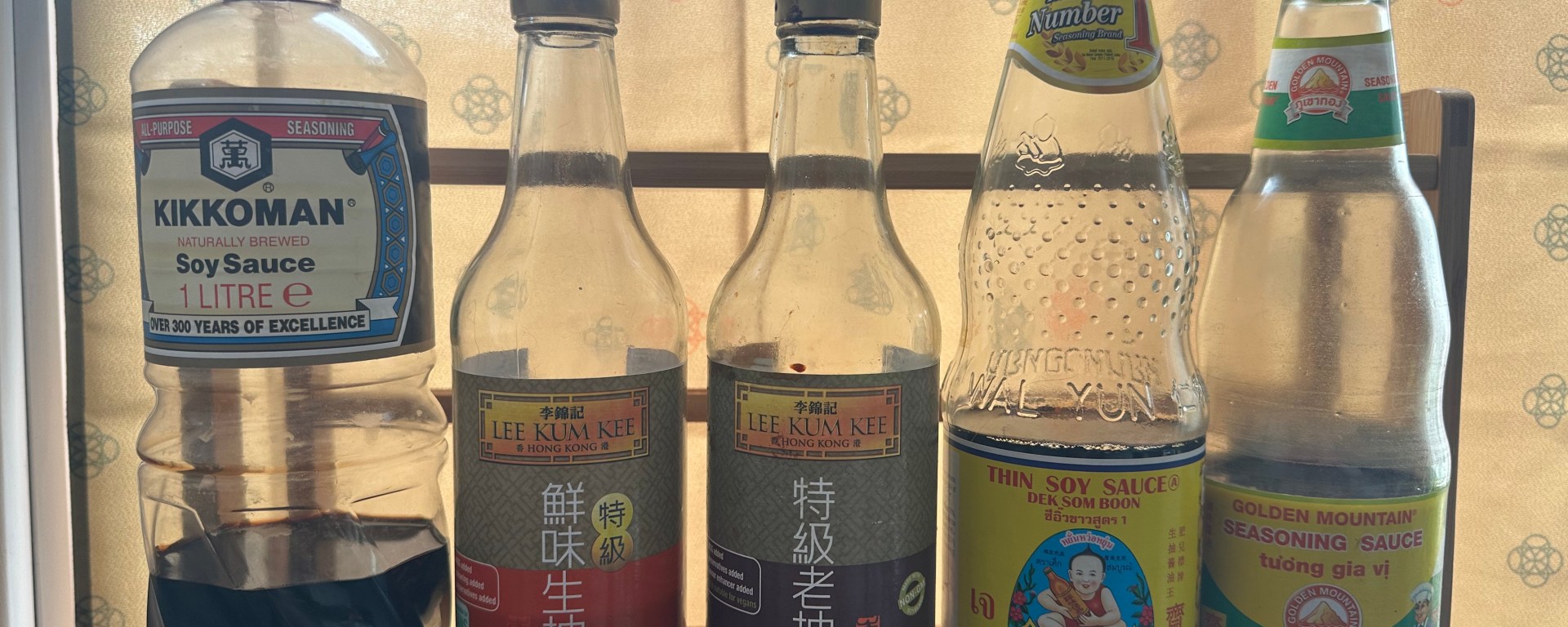
The humble soybean is essentially inedible in its raw form, only the youngest of them are widely eaten in the form of edamame beans. Outside of this single application, soybeans are processed into a plethora of other ingredients. They form the basis of tofu, miso paste, bean curds, and the mighty soy sauce. Soy sauce is made by fermenting soybeans over long periods with salt, flour, sugar, and a handful of other ingredients that come together to make the dark brown liquid that we all know and love. It is an essential component of all East and Southeast Asian cuisines and has varieties ad nauseum.
Soy sauce is also one of the most misunderstood ingredients in our pantries. There are a lot of misconceptions about its purpose and how it can vary wildly. The country of origin, sugar levels, consistency, potency, salinity, and nutritional value can seriously change the flavour profile of a dish. Some are only good as an ingredient whereas others are best as a dipping sauce. We also tend to misunderstand the language used when labelling soy sauces, for example, the misconception that light soy sauce is a healthier or low-calorie option.
Another misconception, albeit a less common one, is around how to store soy sauce safely. For almost all soy sauces keeping a bottle in a dark area out of direct sunlight will be absolutely fine. It is possible that if you keep a bottle sitting around for years that it will get a bit funky and weird but if you’re anything like me you’ll use up a bottle in a few weeks. You can keep it in the fridge to extend it’s life if you want but save that space for fish sauce and oyster sauce (which will have their own deep dive coming soon!)
The first thing you need to know about soy sauces is that there are two main important things to know when buying a bottle:
- How often am I going to use this in my day-to-day life?
- What kind of food do I want to cook?
Your answer to these questions will guide you through deciding what to get. If you want to cook a variety of dishes across different cuisines it may be worth getting a couple of different kinds – soy sauce doesn’t really go bad so you can collect bottles pretty much to your heart’s content. If you are only going to be occasionally using soy sauce in your cooking then it makes more sense to save your money and only buy one. Which one may differ depending on your taste, but typically if this is you I’d recommend buying a Japanese soy sauce like Kikkoman or another one of Japanese origin. If you’re only going to buy one, please whichever one you choose, don’t let it be a generic supermarket Western brand. Almost always they’re overpriced, come in pathetic little bottles, and are devoid of the nuances in flavour that any Asian brand will have. To make your hunt easier I’ve added links.
Countries of Origin
Soy sauce, much like wine, tends to come from a collection of the same countries. The country of origin is the quickest and easiest way to learn about the properties of soy sauce and which one is right for you. It is for this reason I’m going to use country of origin as the easiest way to break down each commonly found type of soy sauce and detail their uses.
Japan
Japanese cuisine is known for its delicate and refined flavours, having a level of specificity and artistry that I think surpasses even the French. This means that Japanese dishes require a very specific collection of ingredients that have been slowly cultivated to complement the Japanese palate. For this reason, Japanese soy sauce is the best to have in your pantry if you only want to have one to hand.
Japanese soy sauce should ideally not be substituted with soy sauce from another country, whereas this is not the case in reverse. If you used a Chinese or Thai soy sauce in a Japanese dish, the flavours might overpower the balance of the meal, meaning the taste will be off. Using a Japanese soy sauce in a Chinese dish, however, while not ideal, is in my opinion passable. The Japanese sauce will be less potent than a Chinese soy sauce, but will not throw the dish out of balance in the same way. Due to its more delicate flavour profile, Japanese soy sauce is also best for making dipping sauces like ponzu, or dipping on its own.
There are a 5 main varieties of Japanese soy sauces, these are Koikuchi (Common, the type you’ll most easily find), Usukuchi (Light color), Saishikomi (refermented soy), Shiro (extra light in colour), and Tamari (low in or lacking gluten). Each variety has specific uses in Japanese cuisine, and any truly knowledgable Japanese chef will know in fine detail the differences between each type. For the purposes of home cooking though it is most likely that Koikuchi is what you’ll find and use with the most ease.
Tamari
Tamari is one of the 5 main sub-categories of Japanese soy sauces and comes from the Chūbu region in central Honshu. It typically has a stronger flavour than Koikushi and Usukushi (the two most common varieties and what is likely to be available to you in a Western supermarket). Tamari is noted because it uses very little or no wheat in its production, meaning that it is often very low in gluten or gluten-free. Tamari is often marketed in Western markets as ‘gluten-free’ soy sauce, so be mindful of this if catering to someone with dietary restrictions around gluten.
On this note, it is worth noting that a vast majority of soy sauces will be vegetarian, if not vegan. It is worth checking the label to be safe, but by and large, you will be able to use most soy sauces if you are vegetarian or vegan.
China
China is the first country to give the world soy sauce, with it first being produced circa 210 BCE in the Western Han Dynasty. This long history has meant that Chinese soy sauce is the most varied and diverse of all soy sauce-producing countries. It is also in China that the great soy divide began, between light soy sauce and dark soy sauce. Light soy sauce is more similar to a typical Japanese soy sauce, though more salty and more strongly flavoured. Japan does produce light and dark soy too, but the majority of Japanese soy sauce available is not designated as light or dark. In this instance, they are almost always technically light soy sauces.
Here’s the actual difference between the two, light soy sauces are typically used to impart flavour and are more salty as a result. After your trusty Japanese soy, it is a Chinese light soy sauce that you need in your pantry. It will be able to be used in place of other soy sauces from different countries (excluding Japan) and it will be vital for achieving authentic flavours in any Chinese dish. As stated earlier, the ‘light’ part doesn’t come from the sauce being healthier, instead, it comes from the lighter colour in comparison to its sister, dark soy sauce.
Light Soy
Light soy sauce is also different because it is a ‘brewed’ soy sauce, meaning the liquid is largely the product of fermentation alone. This means you can also find premium Chinese light soy sauce, known as Tóu chōu meaning the sauce was made from the first pressing of soy beans. Think of it as the extra virgin olive oil of Chinese soy sauce. A double-fermented variant called Shuāng huáng is also available which is more complex in flavour and preferred for dipping. It is also typically far more expensive than classic Tóu chōu, my preferred option from China.
Light soy sauce is what is going to give dishes a deeply savoury and salty flavour. I personally find that good old Lee Kum Kee premium light soy sauce is an excellent work horse bottle that you can find literally anywhere and is always very inexpensive. Another brand that you could opt for is Pearl River Bridge, who tend to sit at around a similar price and quality to Lee Kum Kee.
Dark Soy
Dark soy sauce differs from light because it is a darker more intense colour (no shockers there). It is the deep colour of dark sauce that we use it for. Dark soy sauce, unlike light soy is considered a ‘blended’ soy sauce. This is because additional ingredients are added to brewed soy sauce to add new flavours, textures, and sweetness. Typically the flavour is more gentle, less salty and more sweet. It is this slight sweetness that means sometimes you will see this sauce labelled as sweet soy sauce. It is used across a number of cultures, but the Chinese variety is the easiest to find and usually is a good enough substitute for other similar sauces from elsewhere such as Thai black soy sauce (more on this later). Again Lee Kum Kee premium is your best bet for a good quality inexpensive bottle.
Flavoured Soy
China is also home to a wide variety of flavoured soy sauces, common varieties are mushroom flavoured and seafood flavoured. These sauces may be called for in some Chinese recipes but by and large are more useful if you have a personal preference for their flavour profiles. I don’t personally use these and they won’t feature in my recipes but you can usually swap out light soy for one of these flavoured options and any of the dishes I write about will work out great.
Thailand
Thai soy sauces are probably the most easily available after Chinese and Japanese varieties, they are also significantly different. While fish sauce is the primary seasoning sauce used in Thailand, soy sauce is an essential ingredient in the Thai kitchen. It is used heavily in many of the Thai dishes that have origins in the Thai-Chinese community such as pad see ew.
The main varieties are thin (light) soy sauce and black (dark) soy sauce. These sauces are not interchangeable with their Chinese counterparts with both Chinese equivalents being far more salty than the Thai version. For this reason, if you decide to make a Thai recipe that calls for either, be mindful that you will need to use less than the recipe calls for if making a substitution. The go to Thai brand is Healthy Boy, it is fairly easy to find. It is also common to find Thai sauces flavoured with mushrooms or seafood, as with Chinese cooking these sauces are only going to be called for specifically in a small number of dishes, so only buy them if you really like the flavour or want to experiment.
There is also a third soy sauce that is used prevalently in Thailand, it is often labelled in English as ‘seasoning sauce’. The most common example of this is Golden Mountain Sauce. Personally I use it quite a lot in my cooking but this is because I make Thai food once or twice a week. Essentially it is a sauce used to add more additional saltiness and complexity of flavour to a dish. Commonly available replacements for it are coconut liquid aminos and Maggi liquid seasoning.
A significant note is that Thai black soy sauce is very hard to find both online and in most stores that don’t specifically cater to Thai people in the Western world. A common pitfall, and one I have fallen into myself, is picking up some Thai sweet soy sauce mistaking it for black soy. This is a thicker and, as the name suggests, sweet sauce, that is basically only used for dipping sauces. It is not going to be an essential ingredient for most home cooks so only buy a bottle if you are really keen on exploring Thai food. A pro tip for this variety is that it needs to stay in the fridge unlike the rest of the sauces in this article.
Indonesia, Malaysia, and Singapore
While the Malay archipelago stretches across thousands of islands and is home to a melting pot of several cultures, Malay and Indonesian cuisines share a lot of similarities. They typically use two main types of soy sauce, kecap asin and kecap manis (spellings may vary from brand to brand). Kecap asin is essentially just Chinese light soy sauce, a part of the legacy that the large ethnically Chinese communities have left in Indonesia, Malaysia and Singapore.
Kecap manis on the other hand is distinct to this region. It is dark, sweet and thick, this is due to the sauce being generously seasoned with palm sugar. It is a very hard ingredient to appropriately substitute, your best bet is to use Chinese dark soy sauce and add brown sugar or treacle to your dish to try and mimic kecap manis. This sauce comprises around 90% of Indonesia’s soy sauce use, so is very key to have in your kitchen if you want to be making a lot of Indonesian or Malaysian cuisine. It also appears occasionally in Thai recipes but this is rare. Kecap manis is vital for any nasi goreng fanatics out there, so if that’s you make sure you grab a bottle. The easiest to find brand for kecap manis is ABC, personally I haven’t seen any alternatives commonly stocked in Asian grocery stores.
Korea
Korea, like Japan and China, produces a lot of varieties of soy sauce. It is usually categorised into traditional and modern soy sauces. Both have their place in Korean cuisine. Traditional soy sauces are less widely available and are typically less frequently called for in Korean recipes. Modern soy sauces are typically designated as brewed or blended as they are with Chinese soy sauces. Light and dark Chinese soy sauces are good substitutes for Korean soy sauces, though Korea makes some of the most delicious varieties available and it is worth investing in Korean products if you intend to make a lot of Korean food.
Philippines
Filipino soy sauce, known as toyò in many indigenous languages, is most close in style to Japanese soy sauces, though it is a bit darker and saltier. It is typically used in many contexts in the Philippines, it is mainly worth purchasing if you intend to make a lot of Filipino cuisine as it is harder to find in Western markets and is easily substituted. The most common brand you’ll find is Silver Swan soy sauce.
Other Countries
Other countries such as Vietnam, Cambodia, Laos, Taiwan, Myanmar and even Sri Lanka and Peru do use soy sauce in their cuisines. Local varieties of soy sauce are also produced in these countries, but these varieties are essentially in the style of the other countries we have talked about. For example, Vietnamese cuisine mostly uses fish sauce to season its dishes but when soy sauce is called for it is usually a Chinese style of sauce being used. Similarly in Sri Lanka and Taiwan, this is the case. In Cambodian, Lao, and Burmese dishes a Thai sauce is best used. In Peruvian and Hawaiian cuisine it is best to use Japanese soy.
So which one should I get?
So there you have it, a trip around Asia through its variety of soy sauces. To wrap this all up, the best rule of thumb when deciding which is the right variety for you is to think about which cuisines you want to cook most. Personally I keep Japanese, Chinese, Thai and Indonesian sauces in my pantry as I find this combination covers all the bases for what I’m going to need. I find myself reaching for my Chinese and Thai sauces the most, with Japanese closely behind.
 Fresh Hot Chapatis