
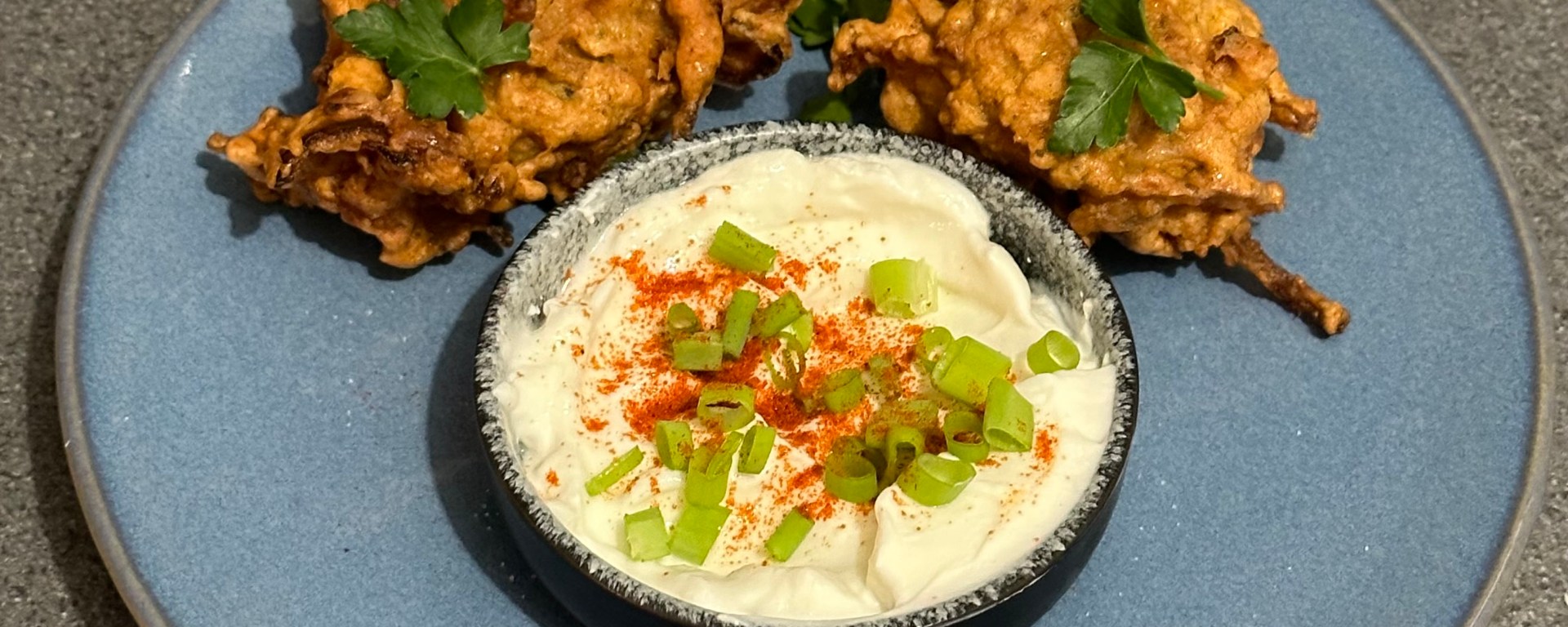
Indian food is, without exaggeration, a part of the soul of every person here in the UK. Brits for decades now have grown up eating a smorgasbord of British-Indian dishes that have been tailored to our national palates. It is here in the UK (Glasgow to be specific) that the mythic Chicken Tikka Masala can trace its origins. For me personally, one of my personal favourites comes in the form of the humble onion bhaji. These meticulously spiced snacks take one of the humblest ingredients in the kitchen and magnify them to legendary status. When I first started making Indian food, shortly after converting to Hinduism 11 years ago, the onion bhaji was one of my first dishes to attempt.
My family still teases me about how bad my first shake at bhajis went, as I produced something that could quite easily be used to construct houses in place of bricks. Since those less than ideal beginnings I have made onion bhajis so many times I could do it with my eyes closed (but for the love of all that is good please don’t do this). I’ve been able to make a few tweaks over the years that have led me to believe that my spin on this classic is truly something to behold. All my secrets on how to make an onion bhaji that will give your favourite curry house a run for its money lies below.
Ingredient note: All of the ingredients I use can be found at a large supermarket, excluding gram flour (also known as besan). I have seen this in a few British supermarkets but this heavily depends on how international the clientele are and in the average British town it may be a little bit tricky to find. If this is the case any local Indian or Middle Eastern supermarkets should stock it. If you don’t live near any Indian stores then Amazon has you covered. Gram flour is an ingredient that comes up frequently in Indian cooking so once you’ve secured your bag you’ll find a plethora of recipes that call for it.
Pro tip: This recipe COULD work in an airfryer but I’ve never tested this myself. Whenever you’re deep frying practice common sense and caution. Your best friend when deep frying is monitoring the temperature so a thermometer is a key tool to have on hand.
| Cuisine | Indian |
| Makes | 8-12 Bhajis |
| Prep Time | 20 Minutes |
| Cook Time | 6-8 Minutes (per batch) |
Ingredients:
- 2 large red onions cut in half then sliced in crescents
- 8 cloves of garlic very finely minced or microplaned
- 2 green chillies diced well
- 1 tbsp cumin seeds, toasted (place in a pan on high heat, stirring or moving consistently, for 1-2 minutes or until toasted and fragrant)
- 1.5 tsp ground coriander
- 1 tsp Kashmiri red cilli powder or deggi mirch
- 1 pinch of hing/asafoetedia (if you don’t have this consider tracking some down as it is a key ingredient in a lot of Indian dishes)
- Pinch of MSG (optional if you have issues with MSG, but I’d suggest reading this mythbusting article about MSG)
- 1 tsp turmeric
- 125g gram flour (besan)
- Generous pinch of salt plus extra to salt cut onions
- Room temperature water to bind (you likely won’t need a lot, but have at least 300ml to hand, knowing most won’t be needed)
- Vegetable oil
Method:
- Cut your onions to directions, as you cut the onions try to aim for fairly thin slices that will allow more potential for making crispy pieces. Toss with some salt to draw out additional moisture (this will help the batter combine and offset some of the more potent acidity of the onions.
- Allow the onions to sit for a while (I usually do 10 minutes) while you toast your cumin seeds and prep other ingredients.
- Combine all spices, besan, and if needed add some water. You are looking for a consistency that is sticky and allows you to form bhajis that will stick together.
- Allow the batter to sit while you heat some vegetable oil to 160°C (320°F)
- Once the oil is up to heat form a bhaji using either spoons or your hands by gathering some of the batter and compacting it into a ball or a patty, be mindful that this will be quite sticky so if this bothers you consider using wet or oiled hands.
- Carefully add a 2-3 bhajis to the oil, they should sizzle on impact and quickly float to the top of the oil.
- Allow them to fry for 2-3 minutes without disturbing them, at this point careful turn them over with some tongues and allow to fry a further few minutes until they achieve a medium brown colour.
- Once bhajis are cooked, allow to cool and drain on paper towels or a wire rack for a few minutes.
- Repeat in batches until all the batter is gone.
- Serve with mint-coriander chutney, mango chutney, fresh cucumbers or raita. I’ve also had some leftover bhajis with a pickled ginger, cucumber and mint salad and some Thai sweet chilli sauce and it was transcendent.

 Fresh Hot Chapatis