
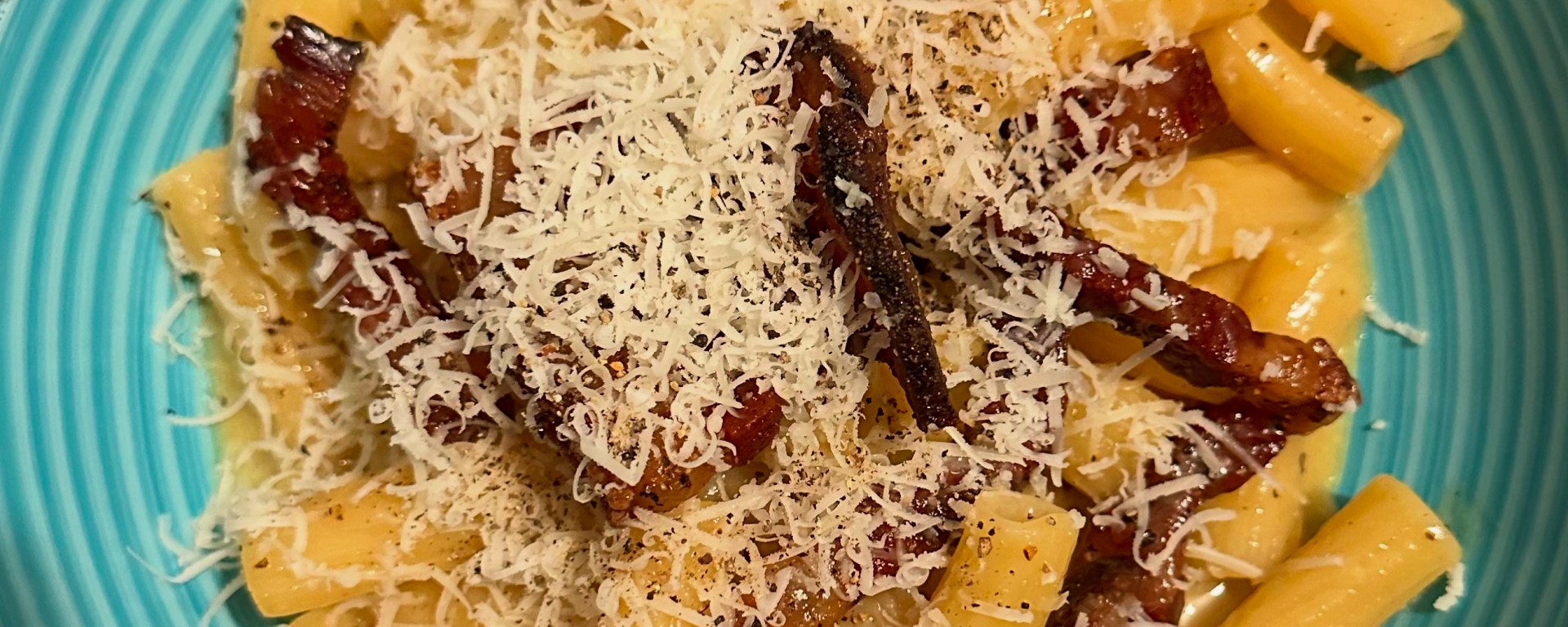
Italian food is by quite a stretch one of the most universally adored cuisines in the world. Every country has adopted and adapted the pillars of the Italian kitchen to fit their own tastes. This has resulted in some very delicious concotions like Mexico’s Espagueti Verde, and some that are less delicious like the old school British take on the carbonara. Carbonara is the pride of Rome, a glimmering jewel in the Italian capital’s culinary landscape. Brits have, over time, swapped out guanciale for deli ham, replaced pecorino romano for cheddar, and committed the cardinal sin of carbonara by adding in heavy cream. I’m here to set the record straight, classic Roman carbonara is the ONLY way to do this dish justice.
I firmly believe that for this dish, the old school method is the way to create something that is truly balanced and delicious. I will accept that a few substitutions are often necessary, and there are even some fun additions that can reflect seasonal ingredients in an excellent way. However, at my core, I am siding with the Italians as a carbonara purist. When done right this dish is really pretty simple but requires a touch of culinary finesse that can take a passable dish and transform it into one that makes tastebuds sing. Because this is the case, I’ve added a quick list of protips below that I’ll call back to in the method section of the recipe itself.
Pro tips:
- Use the freshest eggs you can find, firstly because we’re not ‘cooking’ them so much as we’re temperting them. Secondly because they’re going to give this a rich, unctuous flavour that can only come from fresh good quality yolks.
- Don’t use pre-ground black pepper, if you haven’t got a pepper mill at home I’d suggest investing. Black pepper loses so much of its delicate floral undertones and it’s potency when it’s ground up for you and left to lose all its magic.
- Italians are very specific about what pasta is used for each dish for a reason, this is not the time to bust out the sad 5kg bag of penne you’ve been struggling through for months. A good quality bronze cut spaghetti or rigatoni please. I recommend de cecco or garofalo if you’re in the UK.
- While I suggest in the method that you can either stir or toss the pasta with the egg and cheese mixture you’ll be making, tossing the pasta is the far superior option. It forces a better emulsion of the sauce and it’s also just more fun.
- If you’re able to track down guanciale, DO NOT throw out the fat that renders out of it as you cook it! Save it and use it for something else. I’ve used it in place of oil when I’ve made fried rice, I’ve spread it on bread that I’ve then toasted making a grilled cheese sandwich. You could even use it to make a home made mayonnaise with. It is liquid gold so whatever you do, don’t make me cry by throwing it out.
Ingredient note: This recipe calls for guanciale, the traditional meat used in this dish. It is starting to become more available in the UK but it is still not a common place ingredient. Guanciale comes from the jowel of the pig and is very very fatty, meaning a low and slow render is essential. It is worth hunting it down if you can, but I use pancetta lardons when I don’t have guanciale to hand. The flavour profile is different but both versions are very delicious. I will insist that you must not substitute the cheese in this dish as hard Italian cheeses like parmigano reggiano or pecorino romano are very easy to find.
When in season I do like the addition of charred leeks to this dish. If you want to do this all you need to do is cut your leeks into 1 inch thick disks and halve. Wash thoroughly, pat dry with a paper towel and char on a high heat for a minute or until they’ve developed a lot of colour. For vegetarians I’d recommend using mushrooms in place of the guanciale or pancetta, salt them well and allow to caramelise in a hot pan.
| Cuisine | Italian |
| Makes | 2 medium sized portions |
| Prep time | 15 minutes |
| Cook time | 20-25 minutes |
Ingredients:
- 2 large egg yolks + 1 egg yolk per person (for example carbonara for 2 would use 4 large egg yolks)
- Approximately 40g parmigano reggiano or pecorino romano – any hard Italian cheese will work okay, do NOT use cheddar (at a ratio of 1.5-1 with the yolks)
- 80-120g of Guanciale diced into cubes (bacon or pancetta lardons work fine as substitutions)
- 1tsp Black pepper (or just measure with your heart like I do).
- 200g good quality Spaghetti or Rigatoni
- Salt
- Pasta water (reserve rougly 120ml, we won’t need this much)
Method:
- Separate your egg yolks from the white and add to a mixing bowl (save whites for other things)
- Add guanciale to a cold pan and cook on a medium-low heat to gradually render the fat and prevent it burning. This will take around 10 minutes. If using pancetta it will take less time but follow the same approach of a cold pan, low and slow.
- Grate cheese directly into bowl and combine with egg yolks to make a paste. This should have a consistency similar to a pesto or tomato puree. I recommend using a whisk but a fork will do.
- Add a pinch of black pepper to the paste and combine.
- While the meat is slowly cooking, add your spaghetti/rigatoni to salted boiling water.
- Cook the pasta for 7 minutes or until aldente, the packaging should provide cook times you can follow.
- While the pasta is cooking take a teaspoon of the cooking water and add it to your cheese-egg paste and combine. This is to help temper the egg and prevent it from scrambling when it comes into contact with the hot pasta.
- Repeat the above process with a teaspoon of rendered fat from the guanciale/pancetta.
- Before spaghetti is finished add guanciale/pancetta (fat strained and reserved) to the mixing bowl. Reserve some of the guanciale/pancetta and set aside for a garnish over the finished dish.
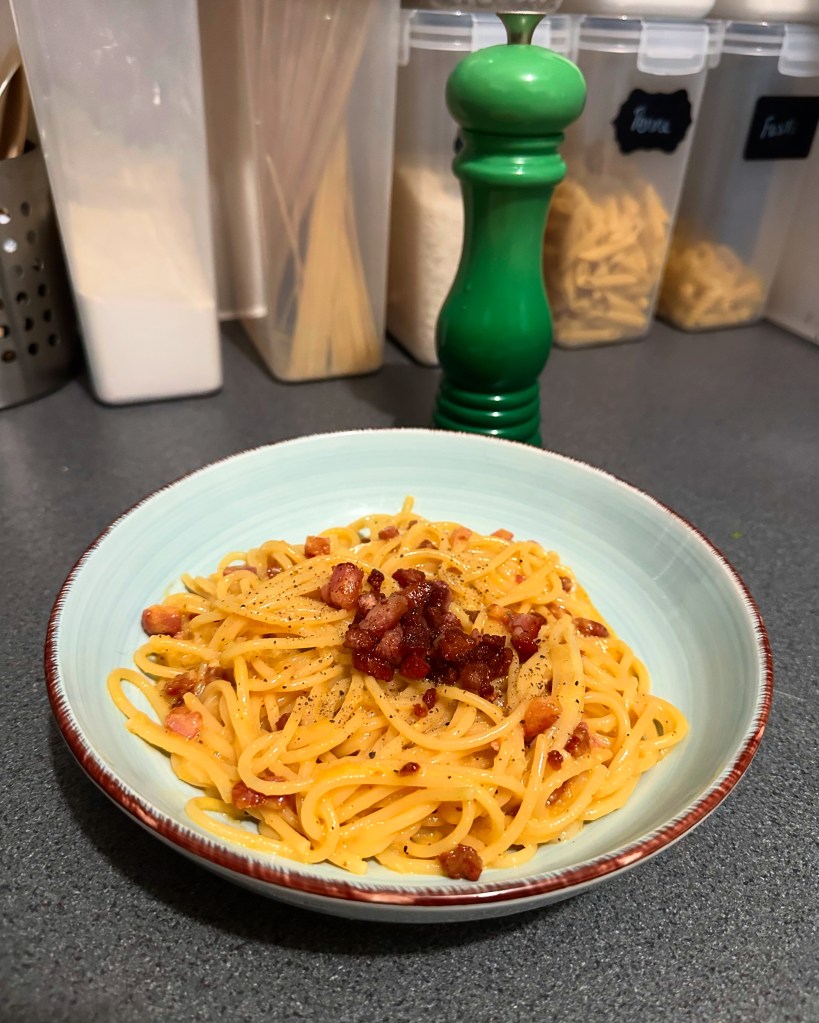
- When the pasta is aldente add to the mixing bowl and toss through sauce. You can stir using a spatula or wooden spoon but I recommend adding the pasta to the bowl and with two hands grab the sides of the bowl, tossing the pasta up and over itself. Keep mixing until a thick and homogenous sauce has formed (usually takes a splash of pasta water and less than a minute to combine).
 Fresh Hot Chapatis