
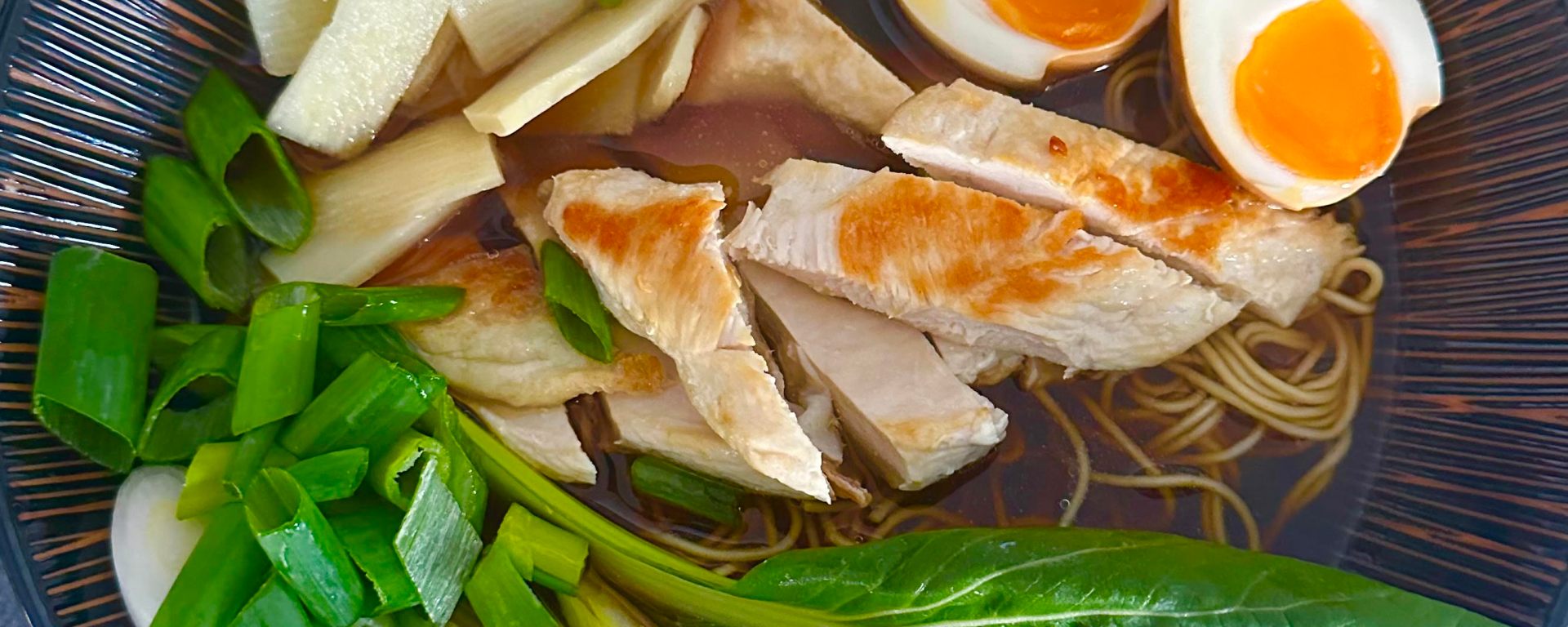
Ramen is a true comfort dish, something that no matter the mood will always make me feel just a little bit better. It is also a serious labour of love. Most varieties of ramen require a lot of time and attention to get right, but this version is great for when you crave a hearty bowl but don’t have the time to spend hours simmering down the perfect broth. My shoyu ramen is something I can make on a weekday night and have on the table within 40 minutes. The reason this recipe comes together quickly is two fold. Firstly we will be making a tare which can be done ahead of time and can be stored in the fridge for as long as you like, this means more ramen for you in a pinch. Secondly because I use instant dashi powder to make the base broth for this dish.
I am a major proponent of taking the time and making the effort to do things the traditional way. This in mind, when I first came across instant dashi I was so intrigued and bought a box of sachets just to see. When I got round to trying them my mind was absolutely blown. The flavour is identical to something homemade and effortlessly elevates any Japanese dish that calls for dashi. Instant dashi is widely available at Asian grocery stores and is easily found on Amazon.
Shoyu ramen is a popular variety of the dish from Tokyo. Because of this it is a variety that is more familiar to people globally as most visitors to Japan enter through Tokyo. Take this as your introduction to other varieties of ramen like miso, tonkotsu, or sapporo ramen. This recipe is highly customisable so have plenty of fun tweaking it to your own tastes!
Ingredient Note: Dashi can be made from scratch by simmering kombu (dried kelp), katsuobushi (bonito flakes) and other ingredients like dried shiitake mushrooms. These ingredients can be found fairly easily online or in Asian grocery stores but the instand dashi powder this recipe calls for is very good and is ideal for those who want a little more ease.
While the base stock and tare of this recipe are essential and should not be deviated from, they can handle the addition of other flavours if you wanted to customise this dish. Adding Thai style chilli vinegar (prik nam som) makes this brighter and spicy, I have also added 50/50 chicken stock to dashi which made this richer and heartier. Equally, adding extra ingredients into the finished soup can be a good way to customise this dish.
| Cusine | Japanese |
| Makes | 2 bowls (easy to expand) |
| Prep Time | 30 Minutes |
| Cook Time | 30 Minutes |
Ingredients
For the Tare:
- 1 Cup or 240ml of Kikoman soy sauce – note that the soy sauce has to be Japanese in origin, it is the most delicately flavoured of all soy sauce producing countries and that is essential for this dish to be well balanced. Chinese soy sauce is too brash in flavour and Thai soy sauce is too sweet with not enough salt.
- 2tbsp Mirin (you can sub for Shaoxing wine, it will change the flavour slightly but won’t harm the balance of the dish)
- 2tbsp rice vinegar or neutral white vinegar
- 1/2 tsp of granulated sugar
- 1/2 tsp salt
- 1 tsp MSG
For the Ramen:
- 1.5 tbsp shoyu tare per serving – note that this will be seasoning your soup and this amount works for the size of the bowl that I serve my ramen in. Use your better judgement and add less if unsure, add more when eating if needed.
- 2-4 sachets of instant dashi powder
- 500ml of water/enough to make the dashi with per portion
- Ramen noodles of your choice, cooked to package instructions – I opt for frozen ramen noodles or dried Korean wheat noodles (somyeon). I advise against using instant ramen noodles.
- Protein of your choice – Chicken thigh, pork steaks, chashu or sirloin steak will work well
- 2 spring onions per person, with the green part julienned thinly and the white left whole with the root removed
- Nori, snack seaweed works well – avoid heavily flavoured varieties like wasabi flavour
- Other vegetables – I recommend any of the following: bok choi leaves cut into 1 inch strips across the leaf, bok choi whites/stem julienned thinly, julienned or ribboned raw carrot, bamboo, beansprouts, pickled red onions, pickled carrot, wakame, shiitake or oyster mushrooms.
- Fish balls or fish tofu (optional)
- Toasted sesame oil
- Ramen egg (boiled medium for 6.5 minutes and shocked immediately into an ice bath) – marinate them in a mixture of mirin, soy sauce and water for 12-24 hours in the fridge.
Method
Method for Tare
- Measure out all ingredients and add to a saucepan off heat.
- Heat on a low and gentle simmer until all sugar, salt and MSG is dissolved.
- If you want to taste it, be aware that this needs to be too salty to be consumed on its own, if the tare tastes slightly oversalted to you then you’ve done it right.
- Allow to cool and store in the fridge – this basically does not go off so you can be stored for as long as needed.
Method for Shoyu Ramen
- Prep all ingredients and have them ready for assembly – you can do most of this ahead of time.
- Cook your protein and set aside to rest for approx 10 minutes or until you’re assembling your bowl of soup (this will retain juiciness).
- Make the dashi by adding water and dashi powder to a pan and heating on a medium heat, add 3-4 sheets of your seaweed and the whites of the spring onions to the dashi. If making dashi from scratch see ingredient note.
- Simmer gently for 15-20 minutes, not allowing it to come to a full boil. Taste as it simmers, you are looking for a light and umami flavour which feels ever so slightly under salted and gentle. This broth is seasoned by the tare so you do not want this to taste salty enough on its own.
- Add tare to the bottom of your serving bowl (about 1.5 tbsp per serving).
- Add cooked noodles on top of the tare in the bowl.
- Add any vegetables to the bowl around noodles, leaving spring onion greens as a garnish for finishing with. Tuck nori sheets half submerged in broth once it has been added.
- Add enough dashi to fill bowl, this should be hot off the pan
- Add protein and egg, vegetable garnishes, and sesame oil.
 Fresh Hot Chapatis