
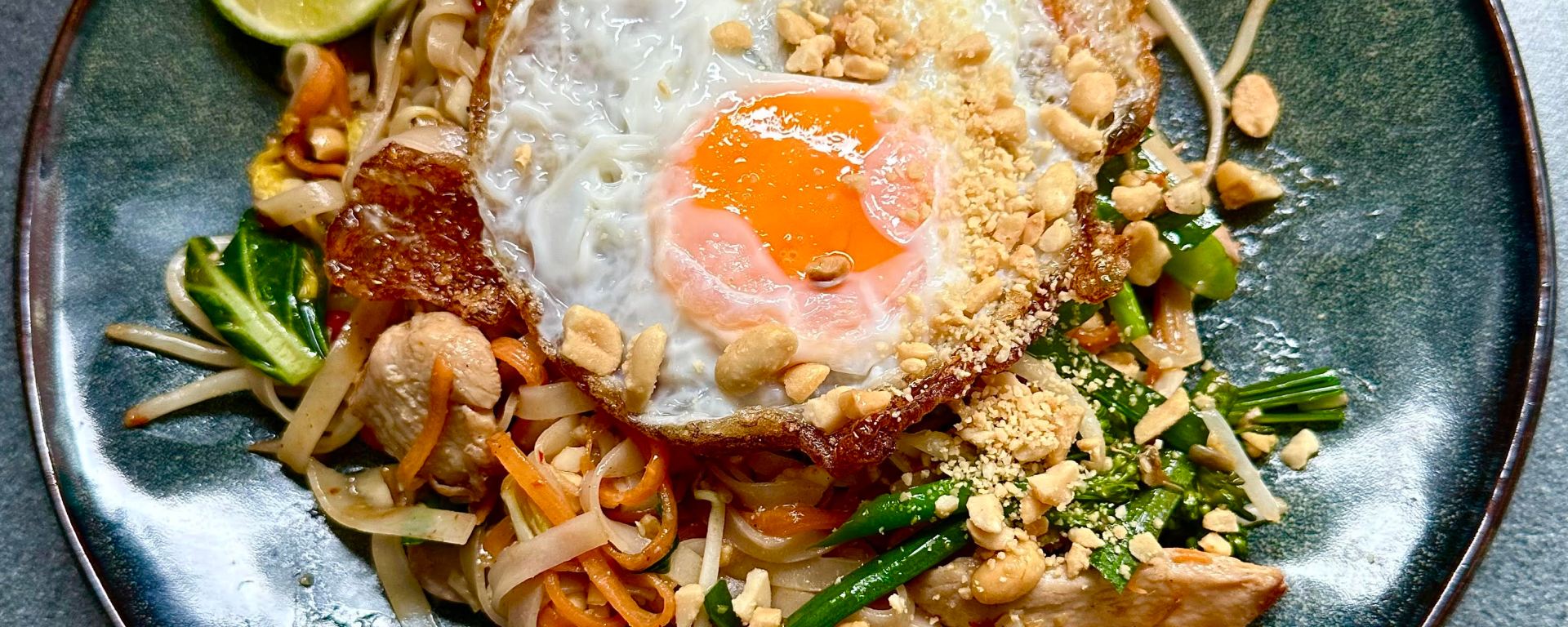
Pad Thai is, I would say, the first dish that I ever truly mastered. I was inspired to learn how to make it after eating it for lunch nearly every week when I used to work in London. Come rain or shine a vendor at the market near my office would make steaming hot Pad Thai, enticing me with the tangy sweet scent wafting down the street. Pad Thai is a dish that has it all. It’s salty, sweet, sour, spicy (if you want it to be), demonstrating the balance that Thai cuisine is known for. With this knowledge, I carefully studied and perfected my recipe. You could say that this is one of my signature dishes.
Over the years I’ve made this dish for many people, all have devoured it with gusto. The best part of Pad Thai is that the actual cook time is very quick. This is if you take my advice and prep everything in advance. Pad Thai is the perfect case study for why mise en place (having everything prepped and portioned out in advance) is essential for any skilled cook. If you take the time to prepare all your ingredients you can calmly and comfortably whip up your Pad Thai in about 5 minutes.
Ingredient Note: This recipe calls for some specific ingredients you may not have to hand. While some things can be substituted, I would strongly urge you to seek out the authentic ingredients if you can. Be exact in how you decide on your noodles, they should be made with rice and water only. Rice noodles from Vietnam sometimes include tapioca flour or mung bean flour. This will make them too chewy and not work as they’re supposed to for a Pad Thai recipe.
For the fish sauce and tamarind please seek Thai or Vietnamese products. Good quality fish sauce can be quite inexpensive and brands like squid or tiparos are excellent (and what I use). For the tamarind be aware that you may find Indian tamarind easier than tamarind from Thailand. Indian tamarind has a very different flavour profile and won’t work for this dish. I keep both Thai and Indian tamarind but do not ever use one in place of the other.
A note on tofu, dried prawn, and pickled radish – In Thailand these three ingredients are combined and cut/diced into small pieces to give an extra layer of flavour and texture to Pad Thai. Personally I only use these ingredients if I have them to hand. If using I recommend cooking them after your protein but before adding your veggies to the wok. Fry until the tofu is crispy on most sides and the prawns are fragrant. Use only extra firm tofu.
Pro Tip: For this recipe, and for most noodle stir fry dishes, you want to cook this in batches. If you cook all servings together the wok will be overcrowded causing the ingredients to steam instead of fry. This will make the noodles mushy and will rob some of the vegetables of their crunch.
| Cuisine | Thai |
| Serves | Use your heart when measuring |
| Prep Time | 2 hours (mostly passive) |
| Cook Time | Approx 5 minutes per serving |
Ingredients:
- Thai Rice Noodles
- Thai Fish Sauce
- Southeast Asian Tamarind – Not Indian
- Palm Sugar (sub with light brown sugar)
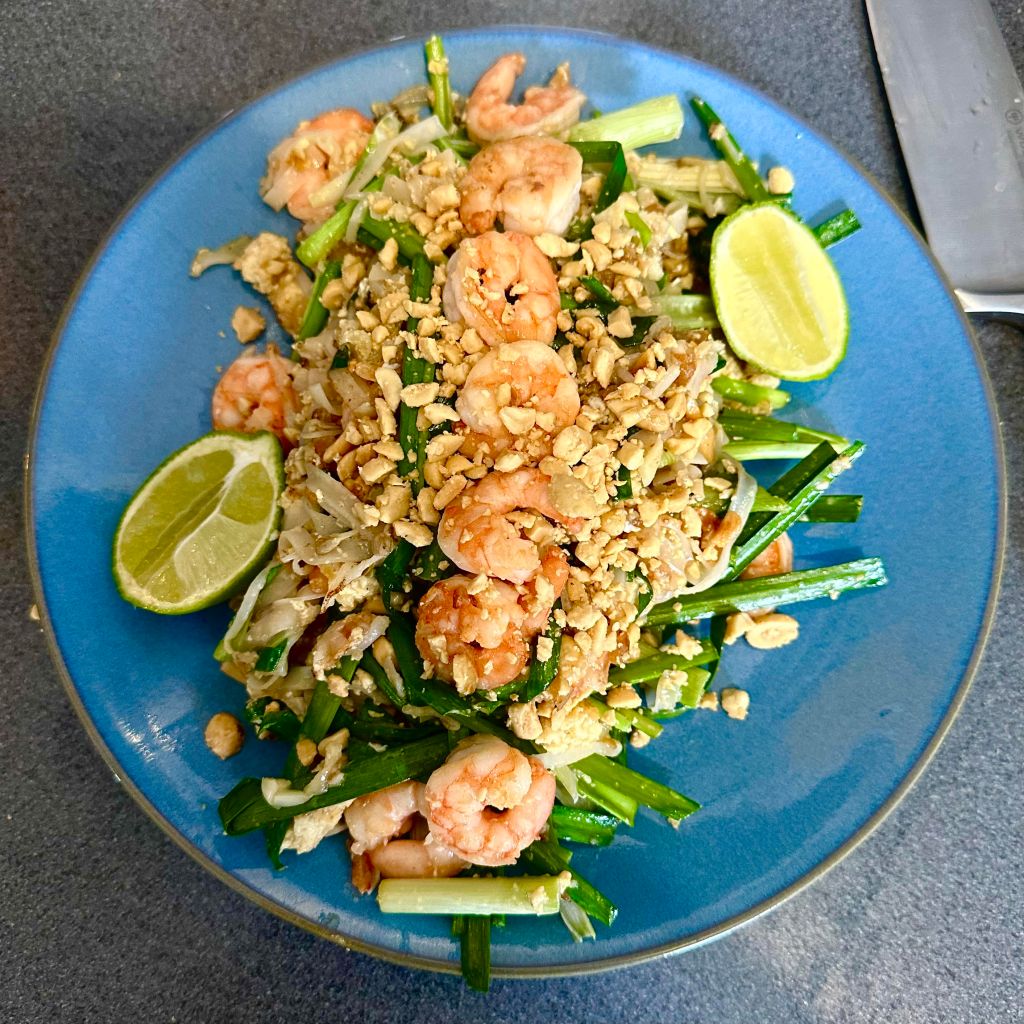
- Protein of choice – I recommend chicken thigh, prawns, or tofu (or all three, fuck it why not)
- Garlic chives (sub with spring onion greens)
- Bean sprouts
- Additional veggies – Note that this is not traditional, as most Pad Thai vendors only use bean sprouts and garlic chives in their dish. Personally I like to add julienned carrots, shallots, and choi sum leaves to my Pad Thai. This doesn’t change the flavour much at all but does add fun textures and additional balance to the dish.
- Peanuts, diced or lightly pounded in a pestle and mortar
- 3-4 cloves of garlic per serving (finely diced)
- 1-4 birdseye chillies per serving (finely diced, adjust for spice tolerance)
- Eggs (2 per serving)
- Oil for frying – do NOT use olive oil
- Fresh lime
Method:
- Start by soaking your rice noodles in room temp water for around 1.5-2 hours. Check them at 30 minute intervals. You’re looking to see that they have totally lost their rigidity and have an al dente mouth feel. Test by taking a noodle and biting the end to test texture. Each brand will be different so this step can be a matter of trial and error. As a general note, the noodles will be cooked in the wok when preparing the dish itself, we want them to be pliable and soft but not completely cooked/ready to eat from being drained.
- While the noodles are soaking, prep all of your ingredients. For the garlic chives, cut them into 1.5 inch pieces.
- If using chicken, chop into bite sized pieces and marinate in 2 tbsp of fish sauce or Thai soy sauce until ready to use. If using prawns add directly to fish sauce. If using tofu, chop into cubes.
- To make the sauce add an equal ratio of fish sauce, tamarind, and palm sugar together and stir well (until most if not all sugar is dissolved). I recommend using 2 tbsp of each per serving. Test the sauce as it is and see if it needs more of any ingredient, you are seeking for a balance of flavours that appeals to you. If it tastes too salty add more tamarind and sugar, if it’s too sweet, more fish sauce etc.
- When all ingredients are prepared, get ready because this is when things move very quickly. Start by cooking your protein in an oiled and up to high heat wok. Once cooked, set aside.
- To handle the eggs you have 2 options, both are used in Thailand. You can either scramble them in your wok after your protein and set aside, or once you have gotten up to step 9 you can push the noodles aside and crack the eggs directly into the wok. Allow them to cook 80% the way and then fold the noodles over them and toss thoroughly.
- Once your protein (and eggs if using this method) is cooked, add additional oil and add your veggies (excluding beansprouts and garlic chives) to the wok and stir fry.
- After about 30 seconds add your garlic and chillies, combine with veggies.
- After another 30 seconds add the noodles, garlic chives and bean sprouts to the wok and toss thoroughly allowing the noodles to get a very light char on some areas.
- Add most of your peanuts and toss again
- Add your sauce and toss through thoroughly
- Add in your proteins and again toss to combine
- Allow dish an additional 30 seconds to a minute to fully cook and combine
- Serve with a fresh cheek of a lime and the remaining peanuts. Additionally add crispy alliums, aromatic oils, prik nam pla, and extra beans sprouts and garlic chives.
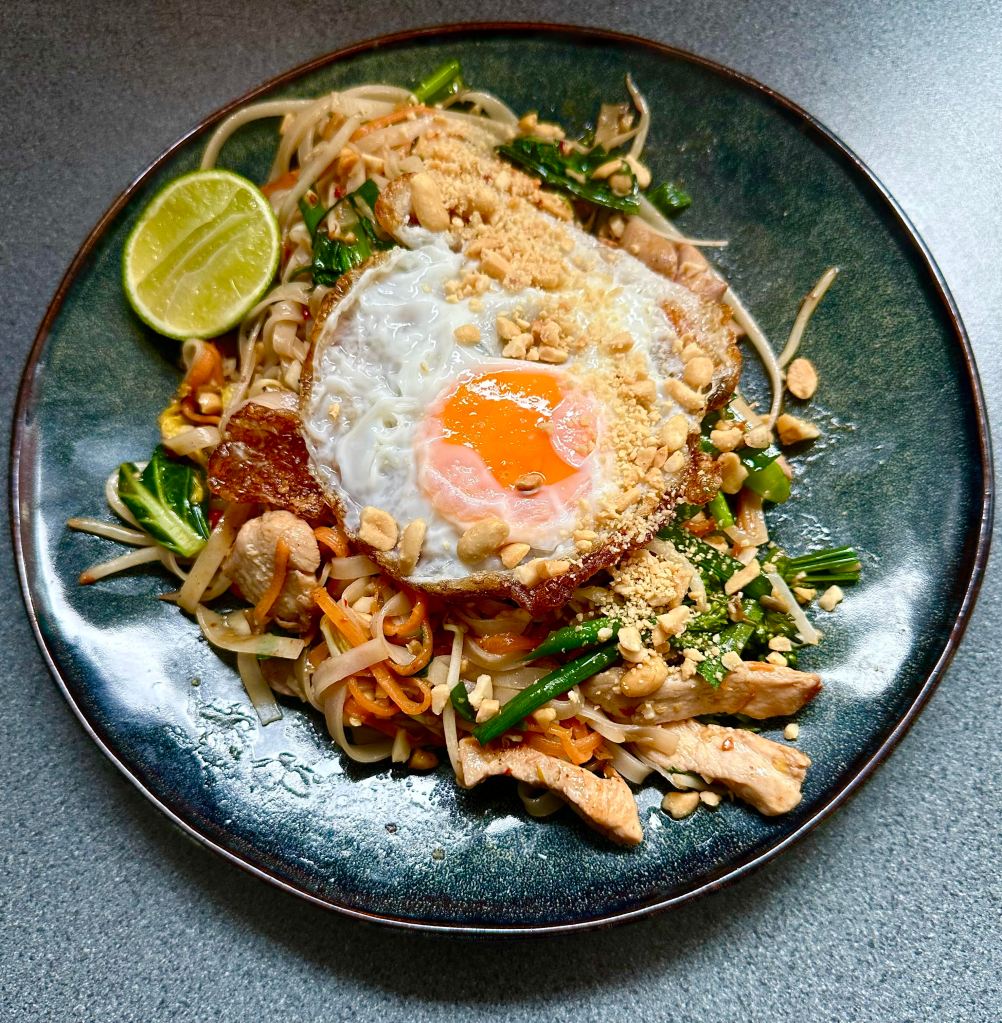
- Optionally, and if you’re feeling fancy, add a Thai style fried egg on top.
 Fresh Hot Chapatis